
Start with one Friday review
Teachers already know how to observe. The harder part is finding the right evidence when time is short. An elementary report-prep workflow works when you can pull up one student history, scan what you have, and see what is still missing before the deadline is close.
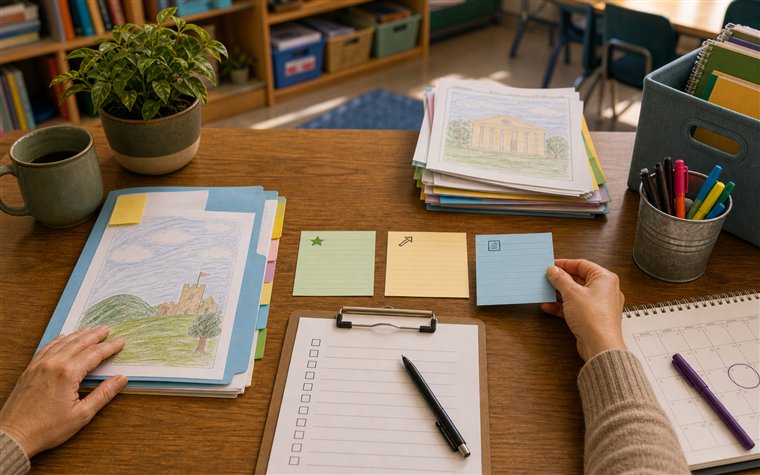
Use Friday review as the checkpoint. Pick one class list or one small group. Open the saved notes and mark which students have enough detail to support a report comment. The goal is to catch thin records while there is still time to watch for better evidence, not perfect coverage.
The What Works Clearinghouse guide on using student data recommends using evidence to ask focused questions and make instructional decisions. Report prep is one of those decisions. You are deciding what a family needs to know, what the student has shown, and what the next step should be.
Find the strength, next step, and example
For each student, try to find three pieces before writing:
- Strength: what the student can do now.
- Next step: what instruction, habit, or support should continue.
- Example: one classroom moment or work sample that makes the comment specific.
If one piece is missing, the workflow has done its job. It has told you what to observe before the reporting deadline.
Reading Rockets explains informal classroom-based assessment as evidence gathered during regular instruction to understand strengths and needs. That is exactly the type of evidence that makes report comments stronger. You do not need every note to sound formal. You need notes that preserve the task, student action, and instructional meaning.
In Dodl Notes, use the quick note flow to save the moment while it is still fresh. Later, use Notes Explorer to reopen the student history and look for those three pieces.
Use the dashboard before the writing week
The dashboard matters before the comment box is open. Once writing starts, every missing example becomes more expensive. You are trying to remember, search, ask colleagues, or reread work when you should be writing.
During the review, look for coverage gaps:
- Students with no recent notes.
- Students with only behavior notes.
- Students with only one subject represented.
- Students with old strengths but no current next step.
- Students with support notes but no evidence of what happened after support.
Do not turn the dashboard into a guilt list. Use it as a planning list. If two students need clearer math evidence, watch for that next lesson. If one student has strong reading notes but no writing notes, plan a writing conference note.
Keep the evidence objective before turning it into a comment
A report comment often compresses weeks of classroom life into a few sentences. That compression is safer when the original note is objective.
Head Start's guidance on objective observation notes separates observation from interpretation. Apply that to report prep:
- Note: "During partner reading, Ava reread the sentence, checked the picture, and corrected the word without a prompt."
- Comment idea: "Ava is using rereading and picture clues more independently during partner reading."
The comment can sound polished later. The saved note should stay concrete.
Build the report draft from notes, not memory
When you are ready to write, open the student history and copy the meaning, not necessarily the exact wording. The saved note gives you the evidence. The report comment turns it into family-facing language.
Use this sequence:
- Choose the strength.
- Choose the example.
- Name the next step.
- Check whether the tone is fair and specific.
- Save any new follow-up note that emerged while writing.
NAEYC's practical note strategies support brief, manageable observation routines. That matters because report prep is more than a writing task. It is the result of small, repeated evidence capture during normal classroom weeks.
Dodl Notes can support the transition because the report workflow sits near the same note history. You are not rebuilding the story from separate notebooks, spreadsheets, and memory.
Finish with a next-cycle check
After reports are submitted, the workflow should not vanish. Choose three students whose comments felt thin and add them to the next observation focus. Maybe one student needs a clearer academic strength. Another may need evidence after a support. A third may have real growth that was hard to explain.
That next-cycle check makes report prep less seasonal. It turns the reporting deadline into feedback for your note routine.
A strong elementary report-prep workflow is not complicated:
- Save useful observations during instruction.
- Review coverage before writing week.
- Find strength, next step, and example.
- Draft from student history.
- Use gaps to plan the next round of observations.
That is enough to move from scattered notes to report-ready evidence.
Keep the review tied to one decision
Report prep becomes easier when each review answers one decision, not every possible question about the student. Before opening a student history, choose the decision you need to make: strength, next step, support, or example.
That focus keeps the review from turning into scrolling. If you need a strength, look for a current moment when the student used a strategy, helped a partner, revised work, explained thinking, or restarted after feedback. If you need a next step, look for the support that changed the moment. The note should help you write a comment that is specific and fair.
This also protects the teacher from overusing the most recent memory. A report comment should come from a pattern or a clear example, not the loudest moment from the week before reports are due.