
Start with two skills and five minutes
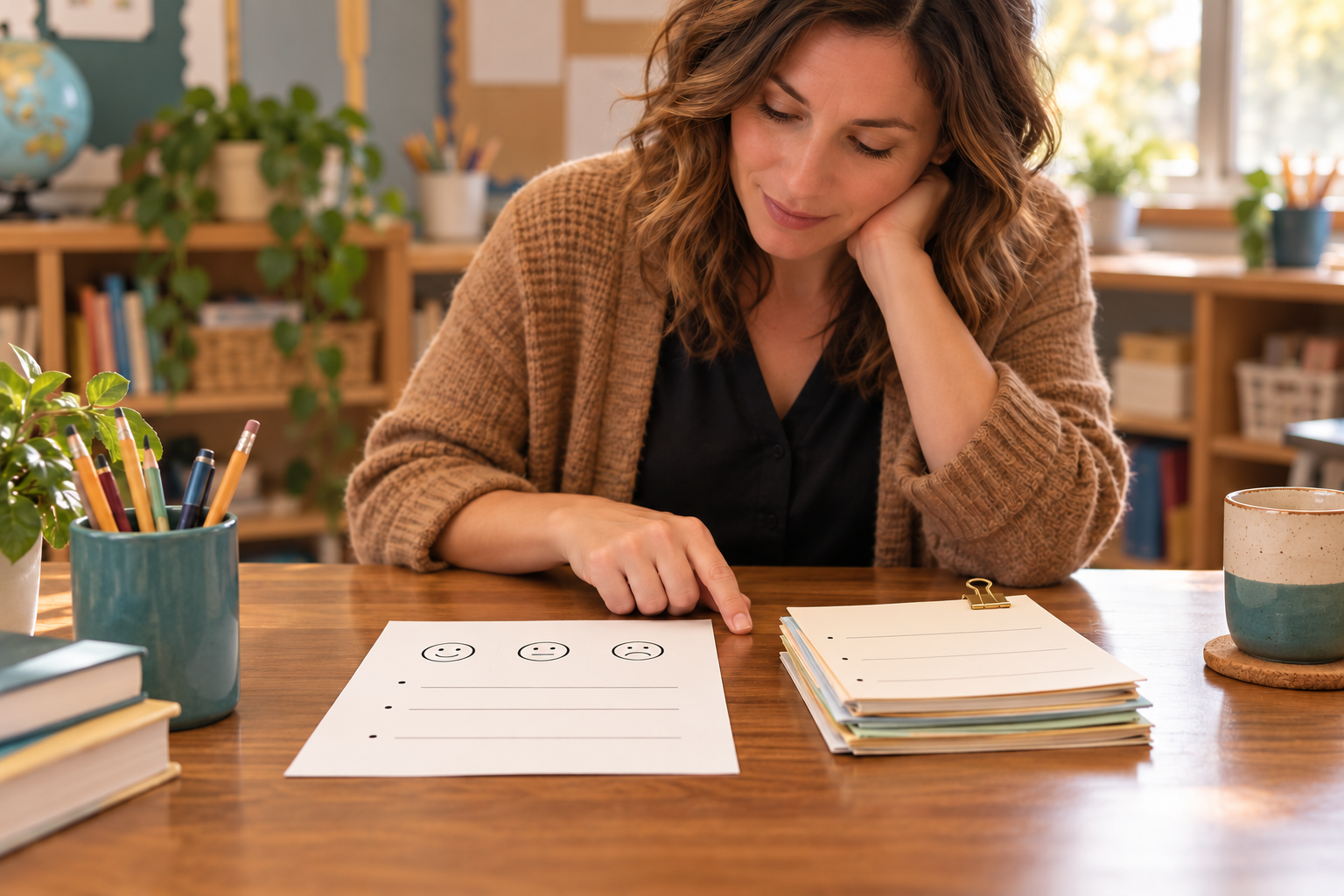
Choose two learning skills you want to write about this term, such as organization and self-regulation. Write three short prompts for each and give students five minutes at the end of a work period. Collect the sheets, then put each one beside the notes you have already saved for that student.
That comparison is the whole point. A self-assessment on its own tells you how a student sees themselves. Your notes tell you what you saw. Read together, they show where a comment can be confident and where a next step is waiting.
Why self-assessment belongs in report evidence
Ontario's Growing Success policy uses the term "assessment as learning" for the part of assessment that helps students set goals, monitor their own progress, determine next steps, and reflect on their learning. It lists self-assessment among the sources of evidence teachers draw on, and it asks teachers to help students build that skill over time. Many other systems use similar language about student reflection and goal setting.
For report cards, the practical value is simple. Learning skills comments are about how a student works, and students often know things about their own habits that you have not seen. A student who writes "I start my work but stop when I get stuck" has handed you a next step in their own words.
Write prompts students can answer honestly
Self-assessments fail when the questions are too big or too abstract. "How responsible are you?" invites a guess. A prompt tied to a routine invites a real answer.
Try prompts like these, adjusted for your grade:
- When I get stuck on a task, the first thing I usually do is...
- One thing I do to keep my materials ready is...
- In group work, I am good at... and I could get better at...
- A goal I have for the next few weeks is...
- Something that helps me keep working when the room is busy is...
Add a simple rating row if you want, such as "not yet", "sometimes", and "most of the time". Keep it to one side of a page. Younger students can answer orally while you write a short note, or circle a picture scale.
Compare the self-assessment with your notes
For each student, read the sheet and then open your saved observations for the same skill. You will usually see one of three patterns.
They agree
The student says they plan their steps before starting, and your notes show them using the planning sheet during two projects. Write the strength with confidence and name a stretch for the next step.
The student rates themselves lower than you would
This is common with careful, quiet students. Your notes show steady independent work, but the student writes "I need help a lot". The comment can name the strength you saw and set a next step about confidence, such as trying one strategy before asking.
The student rates themselves higher than you would
The student says they always finish on time, but your notes show three late submissions this month. This is not a reason to dismiss the self-assessment. It is a conversation, and often the best next step on the report card, worded around a routine the student can try.
When the two disagree, your observations carry the rating. The self-assessment shapes the comment and the next step.
Turning a reflection into a comment
Here is a fictional example. The student wrote: "When I get stuck I wait for the teacher. I want to get better at trying things myself." Your notes show they wait for help during independent math work but use the class word wall well in writing.
A comment that uses both:
"[Name] uses class resources such as the word wall to keep writing independently. [Name] has set a goal to try more strategies on their own in math. Next, [Name] will use the math strategy card before asking for help and mark which strategy they tried."
Notice that the comment reports the student's goal without quoting the sheet word for word. Check your board's guidance on whether and how to quote students on a report card. When in doubt, paraphrase.
Keep self-assessments with the rest of the evidence
A stack of reflection sheets in a drawer is hard to use in January. Decide where they will live before you hand them out.
- Save a one-line note for each student summarizing what they said, with the date and the skill. "Says they wait for help in math. Goal: try a strategy first."
- Keep the original sheets in student folders if your school uses them, or photograph them only where your board allows it.
- Repeat the same two prompts before the next report card so students can see their own change, and so can you.
Avoid putting other students' names, family details, or anything sensitive into your notes. Record what is useful for the student's learning and nothing more.
Where a note system helps
When notes and reflections sit in the same place, comparing them is much quicker than sorting paper.
In Dodl Notes, you can save a quick note about each self-assessment to the right class and student, then open the student history to read it next to your own observations. The dashboard shows which students have few recent notes, so you can see who to observe before reports are due. Teachers with Dodl Notes Pro can also add a self-assessment as supporting evidence on a report draft on the Reports page. The suggested additions appear as tracked changes, attributed to the student's reflection, so you decide what stays.
A quick checklist for report week
- Did each student complete the same short prompts for the same skills?
- Did you compare each response with your own notes before rating?
- Does the comment name a strength you observed and a next step the student can try?
- Is the student's voice reflected without being quoted where your board discourages it?
- Is there a plan to repeat the prompts before the next report card?
A few minutes of student reflection now gives you better comments this term and a clear starting point for the next one.